Call us now :07971549376
 Send Inquiry

 Send Inquiry
ECG Paper Roll
Price 70.0 INR/ Piece
MOQ : 10 Pieces
ECG Paper Roll Specification
- Accuracy
- Precise grid for accurate readings
- Temperature Range
- Storage 10C - 40C
- Treatment Type
- Diagnostic
- Material
- Thermal Paper
- Weight
- Approx. 150-200g per roll
- Storage Capacity
- Depends on roll length and machine
- Application
- Recording ECG/EKG waveforms
- Function
- Captures and displays heart signals
- Humidity Range
- Recommended 20-80% RH
- Automation Grade
- Manual usage with ECG machine
- Color Code
- White with Red Grid
- Suitable For
- All standard ECG/EKG machines
- Product Type
- ECG Paper Roll
- Height
- As per width (e.g., 80mm)
- Properties
- High sensitivity, clear tracing, thermal coating
- Use
- Medical diagnostics equipment
- Dimension (L*W*H)
- Standard sizes, e.g. 80mm x 20m (customizable)
- Shape
- Roll
- Moisture Resistance
- Moderate (store away from moisture)
- pH Level
- Neutral
- Toxicity
- Non-toxic, BPA free
- Roll Core Diameter
- 12.7mm (customizable)
- Perforation
- Available as per requirement
- Print Clarity
- High definition, clear visibility
- Grid Size
- 1mm x 1mm standard
- Surface Finish
- Smooth
- Compatibility
- Universal with leading brands
- Coating
- Thermal sensitive layer
- Packaging Type
- Shrink wrapped or boxed
- Shelf Life
- Up to 2 years if stored properly
ECG Paper Roll Trade Information
- Minimum Order Quantity
- 10 Pieces
- FOB Port
- Faridabad
- Payment Terms
- Cash Advance (CA), Cash in Advance (CID), Cheque
- Supply Ability
- 200 Pieces Per Day
- Delivery Time
- 7 Days
- Main Export Market(s)
- Asia
- Main Domestic Market
- All India
About ECG Paper Roll
ECG paper, also known as electrocardiogram paper, is a specialized graph paper used to record the electrical activity of the heart. It's a crucial component of an electrocardiograph machine and helps doctors analyze heart function. The paper has a grid-like pattern that allows for precise measurement of the heart's electrical signals, which are recorded as waveforms. Key Features of ECG Paper: Grid Pattern: The paper is divided into small and large squares. Horizontal Axis (Time): Each small square represents 0.04 seconds, and five small squares (one large square) represent 0.2 seconds. Vertical Axis (Voltage/Amplitude): The vertical axis represents the voltage or amplitude of the electrical signals, with standard calibration often being 10 mm (10 small boxes) equal to 1 mV. Paper Speed: The standard paper speed is usually 25 mm/sec, but it can be increased to 50 mm/sec for better waveform definition. How it Works: 1. ECG Machine: An ECG machine records the heart's electrical activity through electrodes placed on the body. 2. Signal Recording: The machine translates these electrical signals into waveforms on the ECG paper. 3. Analysis: The waveforms are then analyzed by doctors to assess the heart's rhythm, rate, and overall function. Importance: ECG paper allows for accurate measurement of ECG intervals and amplitudes, which are essential for diagnosing various heart conditions. It helps in identifying abnormalities such as arrhythmias, heart attacks, and other cardiac issues. It also helps monitor the heart's response to treatment.Universal Compatibility and Superior Print Quality
Our ECG paper roll is engineered to work seamlessly with all standard ECG/EKG machines, ensuring quick and easy setup across a range of diagnostic equipment. The high-definition thermal sensitive coating produces clear and precise grid patterns, facilitating reliable and accurate readings necessary for patient diagnostics.
Safe, Non-Toxic, and Durable Construction
Produced from BPA-free, non-toxic thermal paper with a neutral pH, our rolls are safe for both patients and healthcare staff. Designed for moderate moisture resistance and optimal storage between 10C and 40C, each roll promises longevity and sustained print quality for up to two years.
Customizable Features for Tailored Needs
Available in standard dimensions, such as 80mm x 20m, our ECG paper rolls can also be customized for core diameter, length, packaging, and perforation to suit different diagnostic setups. The smooth finish and strong thermal properties make for reliable usage in varied clinical settings.
FAQ's of ECG Paper Roll:
Q: How do I store the ECG paper roll to maximize its shelf life?
A: Store the ECG paper roll in a cool, dry environment at temperatures between 10C and 40C, with relative humidity maintained at 20-80%. Keep the rolls away from direct moisture and excessive heat to ensure up to two years of optimal print performance.Q: What makes this ECG paper roll suitable for all standard ECG/EKG machines?
A: The roll's universal compatibility stems from its standard sizing, customizable core diameter (12.7mm by default), and high-definition print clarity. It fits and functions seamlessly with leading ECG/EKG machine brands used in medical diagnostics.Q: Where is the ECG paper roll typically used?
A: These rolls are primarily used in hospitals, clinics, diagnostic centers, and medical facilities equipped with ECG/EKG machines to record and display heart signals during patient assessments.Q: What benefits does the thermal sensitive coating offer?
A: The thermal sensitive layer enables high-definition and clearly visible printouts, ensuring every waveform and grid is distinctly recorded for accurate medical interpretation. This enhances diagnostic accuracy and reliability.Q: When should I use perforated ECG paper rolls?
A: Perforated ECG paper is advisable when individual sheet separation is required for record-keeping or filing. Perforation type and placement can be customized based on procedural or storage preferences.Q: How does the grid accuracy contribute to patient care?
A: The precise 1mm x 1mm grid ensures that each ECG tracing is recorded against a consistent and exact background, aiding clinicians in accurate waveform measurement and interpretation.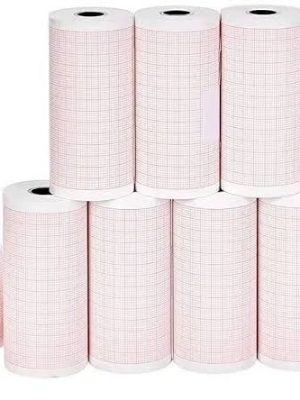
Tell us about your requirement

Price:
Quantity
Select Unit
- 50
- 100
- 200
- 250
- 500
- 1000+
Additional detail
Mobile number
Email


 Send Inquiry
Our Products
- ICU Products
- Anaesthesia Machine
- Ventilator Machine
- Ecg Machine
- Multiperu Monitor
- Radiology Products
- X-Ray Machine
- Eco DR Machine DR System
- CR System
- C-ARM Machine
- Hospital Furnitures
- Hospital Bed
- Delivery Tables
- Dustbins
- Emergency Trolleys
- Crash Cart Trolley
- Instrument Trolley
- OT Products
- OT Light
- OT Table
- Cautery Machine
- Autoclave
- Home Care Products
- Ward Equipments
- Micro Fogger
- Suction Unit
- Scrub Station
- Digital Radiography Solutions
- Syringe Infusion Pump
- X-Ray Illuminator
- Hospital Portable Bed
- Patient Transfer Trolleys
- Patients OPD Couch And Chair
- Bed Mattress
- Ventilation
- Digital BP Machine
- Home Care items
- Consumeable Item
- Surgical Instruments


Plot No-744, Gali No-29, Prem Nagar, Uncha Goan, Ballabgarh,Faridabad - 121004, Haryana, India

Mr Om Prakash
(Proprietor )
Mobile :07971549376
 Send Inquiry
 Send SMS

Developed and Managed by Infocom Network Private Limited.
